Tag Archives: family

My near death experience

I was 17 when I had my classic near death experience.

I look down and see my body below, a bright light shines in front of me. I feel warm and calm. I understand ‘I’m dying’ and I feel okay about it, no fear, no anger. Calm acceptance.

I float above my body lying on the bed. there is the clank of something down below, something small falling and a voice says ‘Shh, this boy is very sick, he may not make it.’ The moment ends.

The experience stays with me since then, as a comfort of a dying experience, as a ‘good story’. I talk rationally of oxygen deprivation causing the light, of the possibility of false memory. Eventually as a profound moment in my life. More on this.

So, how did I get there?

Seventeen, second year university student, living at home as was the norm then. Twice a week, I had a philosophy lecture at 2pm, after lunch which probably consisted of a pie and sauce and chips at the uni cafe. I enjoy the lectures, but there is something new. I sit in class and start to sweat and feel nauseous with sharp pains in my side. I struggle to focus. Any moment I’m going to vomit. But I don’t and after maybe 30 minutes the attack stops and I forget about it.

This continues for a few weeks, it gets worse. I soldier on. No whinging, get on with it.

Yes, you’ve already guessed and you’re right. Different times.

Eventually I feel too sick to go to university and stay at home three days, bouts of vomiting and diarrhea, woozy, no strength to study. My parents ‘leave me to it’, no thought of calling a doctor (they did house calls back then). I don’t eat. I lie in bed hallucinating, dozing and by Friday night I feel like a ghost, translucent and ‘out of my body’.

Saturday morning, I feel as if I am separate from the world, a ghost, a shadow. I understand something is seriously wrong. I say to my parents ‘I really need to see a doctor.’ Mum says, ‘I’m busy’ and dad says, ‘Walk to the doctor yourself if you want, I’m mowing the lawn’.

As I expected. Not surprised. I walk to the doctor about 2 kms away. I remember seeing the receptionist and saying, ‘I need to see a doctor’ and she taking one look and running into the doctor’s office. She opens the door and says, ‘doctor will see you now’ and I stand up and nothing after that for two days. Presumably I fainted? Maybe memory is buried by trauma and I refuse to remember.

Yes, you guessed right. I had a ruptured appendix, peritonitis and poison flooding my system. I’m on the way out, the final curtain, my last hurrah.

I learn this later and that I was rushed to hospital by ambulance and straight onto the operation table.

I later learn from my older brother that the GP ‘tore strips off dad for not acting earlier, for making me walk, for such utter neglect.

I am in hospital for three days and home for two weeks, a nurse coming daily to change the drainage tubes and dressings. I return to university and life goes on.

The episode is never mentioned again. As if it never happened.

I never refer to it. I accept it all as normal behaviour. That’s how life is and you just get on with it.

Years later, a therapist opens my eyes. This is not normal behaviour today and it was not normal behaviour then.

So.

This long-ago experience resurfaced while writing an opinion piece on the differences between baby boomer childhoods and the childhoods of the last 20 or 30 years. I intended to use my near-death experience as a sharp delineation between ‘old school, tough love’ parenting for boomers and the expectations of recent decades; no value judgements, simply saying, ‘this is how it was.’

That idea died in a ditch when the therapist’s words truly hit me. This was not how parents behaved then or behave now. It wasn’t tough love, it was always neglect.

This is not a boohoo poor me story. I lived and for years never thought of it.

Now it swirls in my mind every day as I see how much it has shaped my life and my writing.

When pebbles become avalanches and relationships end

Friends of mine have just split up with no chance of reconciliation and I have conflicting emotions. Part of me is shocked that the ending came abruptly and with such finality and a smaller part of me says ‘that was always going to happen, I saw it coming’.
More accurately, I should say that I was surprised and then began to think about the no-longer-a-couple and understood that I had registered the signs, grown accustomed to them and assumed they would continue together neither truly happy nor miserable, fearful of being alone.
When did the process begin? At what point was the end of the relationship unavoidable and needing only one final pebble – an unkind word, a look, an impatient sigh or a miniscule act of bad faith – to trigger the landslide of recrimination and the decision from which there is no going back?
Those tiny pebbles of hurt or neglect, unconscious perhaps at first and later consciously, maybe deliberately hurtful, uncaring at least, which unearth other pebbles and soon there is a tumble, small and then bigger and finally an avalanche and then silence when the words are over and there is nothing left to be said.
Not always of course, not every day. Rather an accumulation of grit like an axle on a baggage-laden cart rolling along dusty roads day after day in good times and bad and it is not noticeable and anyway it does not matter or we believe it can be rectified ‘later’ [fateful, lazy word] when we have more time or are under less pressure or the kids are grown up or a myriad of other reasons until later is replaced by ‘too late’.
Looking back we puzzle when the pebble became an avalanche and we let it happen.
And yet –
And yet. Is the feeling of the inevitability of the end itself merely an excuse for our self-absorption in the trivia of the narcissistic culture in which we live, a world obsessed with individual rights [happiness, freedom, success, self-expression].

And what is happening in our little Swedish village?

Anika is walking in long summer twilight, pacing out to the old ruined church and back through the village to the cluster of houses high in the fields and farms to the east of Ovraby. She sends startled hares running and catches a glimpse of a deer and her young.
She ponders possibilities, future scenarios of this woman from a foreign land living in this small community: never quite belonging because she is a foreigner and yet almost accepted since she married a Swede and speaks Swedish fluently. She is inside and outside, belonging and not belonging and feeling this is a metaphor for her life.
Will she become the local eccentric living alone, not perhaps with a cat, but still a figure of curiosity and sorrow?
Will she stay the tragic figure who lost her husband and chose never to love again? Who chose to remain childless and alone?
Will she stay on the track which presently runs her life and be the successful career woman travelling to and fro, retaining her house in Ovraby though rarely seen and become a figure of envy and respect amongst the village folk?
Doe she have the courage to roll the dice with Tom, that lost soul from the other side of the world who still speaks with the spirit of his dead wife, for Heaven’s sake?

In a small Swedish village where strange things may happen

I am in Ovraby in Southern Sweden for mid summer in the very village where our heroine Anika lives in the dream house she built with her beloved Anders before tragedy struck.
That tragedy and the aftermath has driven her to the Camino where, you will recall, she has recently met Tom from Australia and where both are trying to come to terms with the past and to believe in a now and a future.
We are in a typical small village, maybe thirty houses with no shops or other services or facilities and where neatness and control and good appearance may hide many a secret. I am not staying in Anika’s house, but the one I have chosen for her is not so far away and fits perfectly with what I have in mind for her.
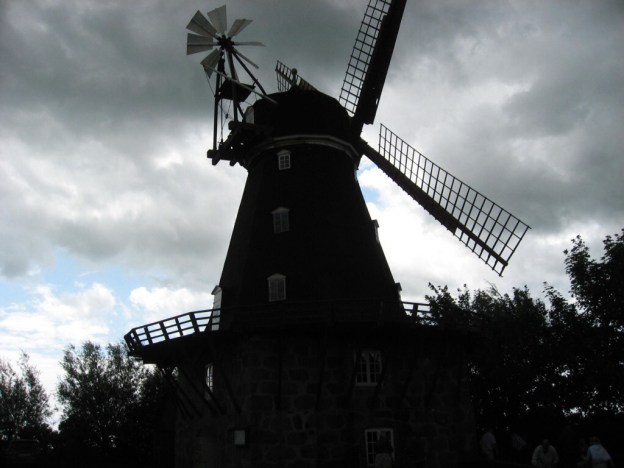
Mid summer is over, the usual mix of cloud, scudding rain and lovely sunshine plus the maypole at the old mill and the ebb and flow of friends and strangers coming together for a day and a night.
Tom has returned to Australia and they have agreed to meet again in one year.
Will it happen?

Afternoon tea with dragons

We all love dragons, right? One day per week I mind my granddaughter after school until mummy and daddy and little brother get home. The first hour or more is spent filling the bottomless pit of this slender 5 year old with a variety of food, remembering that last week’s favourite food now is ‘yuk’, that ‘mummy and daddy say it is okay to have biscuits’ though both of us know this is untrue and Emma cannot keep a straight face as she says it. ‘Good try’ I say and she laughs and we negotiate our way through until she says ‘will you play with me farfar?’ This being Swedish for grandfather and a story for another day. We play ‘make believe’, both of us filling in the story line and adding costumes as we go; a blanket becomes a magic cloak, a piece of string a golden binding and so on: games and stories played countless times by countless children. And I have been promoted over the last three years. First I was typecast as a ‘scary monster’, with instructions not to be ‘too scary’, then a bad dragon who invariably and magically became good and married the princess [no prizes for guessing who this is]. Lately I have become the ‘good dragon with magical powers’ and this is a very fine role indeed. The only drawback to being a dragon is that when three year old William comes home, I must be killed for he is the fearless knight and dragon slayer. Such is life. Or not, as the case may be. Now the tram has stopped and so must I.