Category Archives: Uncategorized

Decisions …

I described in my previous post the response of an editor to my novel ms set on the Camino. That person believes it can work well as a travel narrative and currently does not work as fiction, essentially being too introspective, intense and ‘Gothic’. I accept much of her criticism, albeit surprised she detested sections of my novel which published authors [not editors or agents] have praised in writing workshops. Fair enough, opinions differ and this editor is a professional whose assessment I should take seriously before deciding on my next step. After all, this is my first attempt at writing fiction.

But…

At a book launch last week, an acquaintance [a highly successful fiction writer] asked after my Camino ms, I summarised the opinion and after prodding, revealed the identity of the person. Her response – ‘Oh, everyone knows x never likes that stuff! X always goes for -‘. Followed by first rate gossip and a faint glow of affirmation on my part.

Alright, nothing new, nothing to be seen here, move along please. Publishers have preferences and profiles, make decisions good and bad and their worst mistakes become the stuff of folklore and we wannabe writers have a good laugh. I am not kidding myself, I know my ms needs more work. The frustration is receiving such contradictory feedback.

What next?

Revise my novel ms? No, I need to leave it for minimum six months to gain some distance from it.

Write a Camino travel book? Nope, the world has enough.

Start a new blog devoted to the people – fascinating, mad, appealing, romantic, annoying – whom I have encountered on various pilgrimage paths? Yes. Watch this space.

Write a university novel? I have had a story in mind for some years and maybe now I have the perspective to write it after four years out of the game. Again, watch this space.
 

A surprising response from an editor

Six weeks ago I sent my novel ms to 3 publishers. I had low expectations of success given the small number of novels published annually in Australia and the tidal wave of unsolicited manuscript submissions washing up weekly on editors’ desks. Nor did I expect any feedback since publishers’ websites sternly enjoin ‘no feedback will be given’ and ‘silence equals rejection’. Let’s add the fact that I had no idea if my writing was good, bad or ho hum who cares?

Imagine my surprise to receive feedback from one editor . Alas, not feedback saying this is the most brilliant piece we have ever seen and we’re publishing it unchanged in a print run of 1,000,000, film rights already being auctioned. Quite the opposite. As a work of fiction it requires more work and they are not interested. So far, so depressing. I keep reading.

They love the ‘compelling sense of place’ and the ‘very strong travel narrative’ – you may recall my story is set on the Camino in Spain and France – and suggest I focus on that in the short term, perhaps placing articles in travel magazines, perhaps as a stand alone travel book. Well, knock me down with the proverbial feather. I love quality travel narrative ranging from the classics of the 19th and early 20th century to contemporary travellers/commentators/writers and am no snob who believes fiction is inherently superior to travel narratives.

Anyway, it is early days and only 3 publishers, however, it does give me food for thought [sorry for the unimaginative cliché] as this blog began life as a story of hiking and writing and maybe that will be my path again after a detour into the land of fiction. Not that I am giving up on fiction, perhaps this story needs a breather though. It is my first effort, I have learned a lot and cliché alert number two, you have to know when to hold and when to fold.

I have experienced three dramatic turns in my life in the last year and this could be number four.

Watch this space…


a dog, a jacket and a fine memory

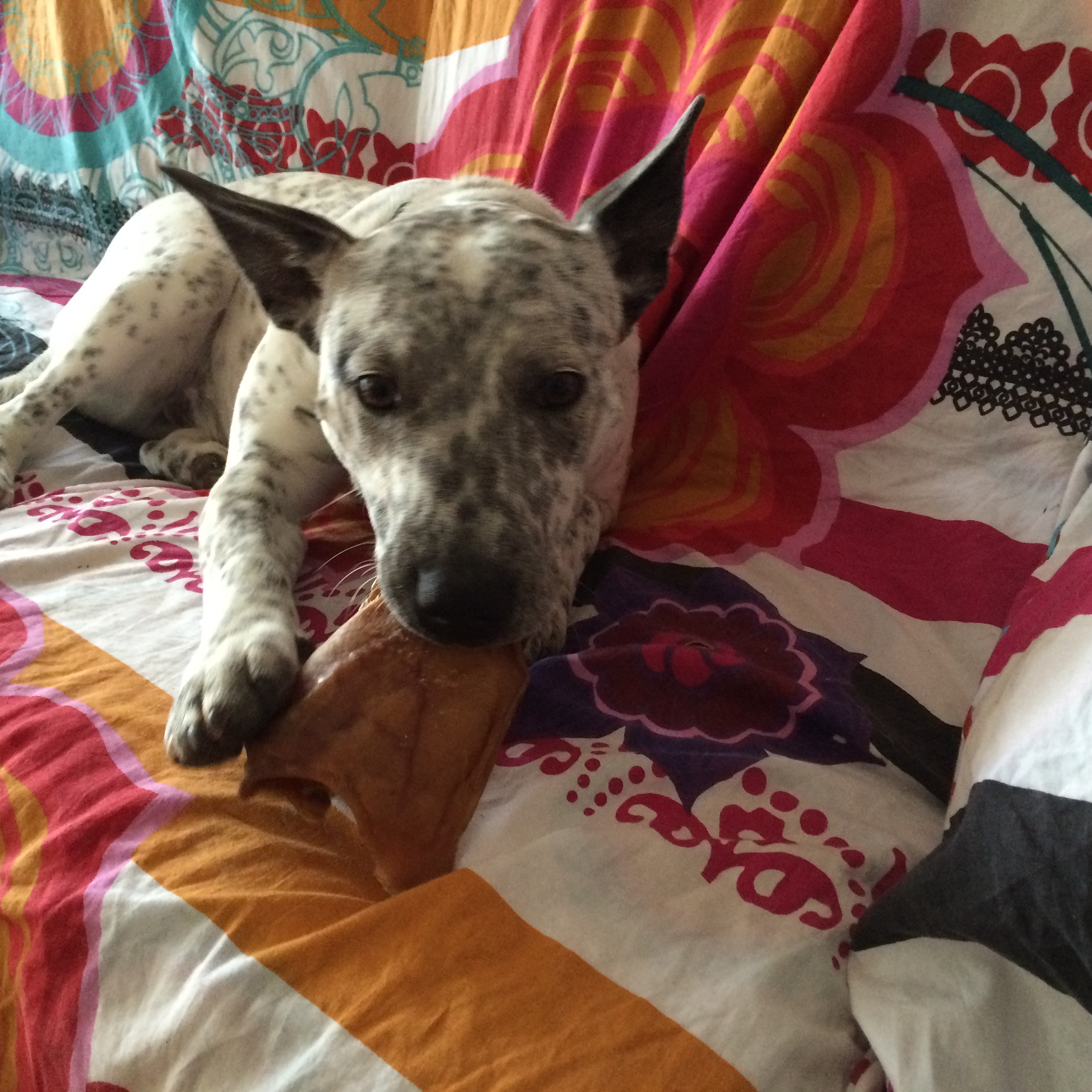
Yesterday I took Rosie for a walk, Rosie being the dog we’re fostering for a dog rescue organisation until someone adopts her – and if anyone has a farm or acres of land and/or wants a working dog, she is a 9 month old 18 kilogram dynamo of energy who needs more space than is available in hipster Brunswick. Rosie is super friendly and super cute [and super chewing, biting, digging etc].
Australian cattle dog/Staffordshire cross. The body of a blue heeler and the heart of a staffie.
2015-06-10 14.36.01
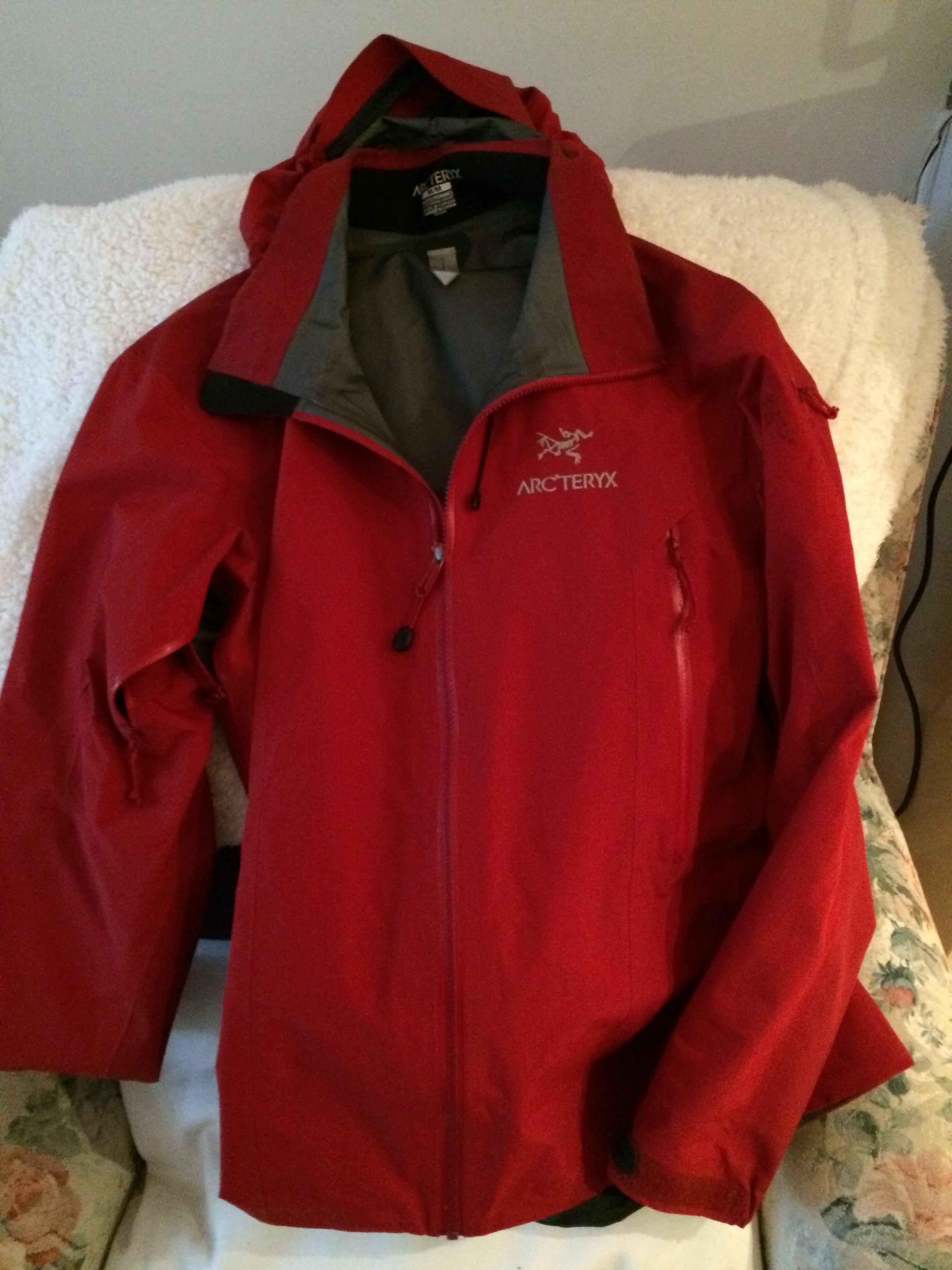
So, yesterday was cool and wet [again] and I dragged out my red waterproof jacket and had a rush of recollection. It is almost exactly one year since I did the Coast to Coast walk across England, starting at the Irish Sea, into the Lakes District, through the Yorkshire Dales and Yorkshire Moors until reaching the North Sea; 310 kilometres in 13 days. A lovely walk with a lovely group of people, through sun and fog, grass and bog. And, you see, I had not worn my red jacket until today and the memories and emotions flooded in. It was a brilliant experience.
This year I have only one six day walk in October [Kangaroo Island], next year hopefully will be the hike down Italy from Saint Bernard Pass to Rome.
2015-07-06 09.22.57
In the words of the inimitable Leonard Cohen – ‘If I’ve got to remember, that’s a fine memory’, inspired by my old red jacket which has covered thousands of kilometres with me.
2014-07-27 18.40.28
Isn’t is strange and wonderful how life throws up these connections and loops as long as we are open to them?
Oh and the gorgeous Rosie is lying at my feet as I write, more memories of the dogs who came before her. Shep, Beau, Bruce, Max and Geoff and not forgetting the lovely Matilda, going strong in Sweden.
Soon it will be time for another walk; I do 5 kilometres per day, but it is not enough for a working dog….

Literary speed dating

No, this does not refer to speed dating literary women, though I have done that in the past with modest success. It refers to speed dating literary agents and publishers; that is, being given three minutes maximum [in reality 30-60 seconds] to interest/intrigue/tantalise a potential publisher or agent to the extent that one of them will ask to see the first chapters of my manuscript. This is my improbable dream for the speed dating day in two weeks time.
So I have put aside my 5th draft to concentrate on writing the perfect pitch of 1 minute, the perfect synopsis of 300 words and the toughest of all ‘tell me what your novel is about in one sentence’. Karma perhaps for all the PhD students I forced to describe their potential thesis in one sentence – two, if I was feeling generous. It is difficult to reduce the hard work and great ideas and brilliant writing to a sentence and I’ve just spent two hours in my favourite local café trying to articulate the core of my manuscript – the beating heart – in one sentence.
Next I’m focusing on the so-called ‘elevator pitch’. Why would any publisher be interested in my manuscript rather than the x thousand others which will cross their desk? An excellent question.
The good news is that I’m enjoying the torture!
Thanks you Australian Authors Association and Writers Victoria for this opportunity in a couple of weeks.
Okay, back to work….
man reading

The romantically unemployed and free market economics

I read an article which used rational choice theory within economics to categorise those not in a relationship as being ‘romantically unemployed’. It referred specifically to the construction of the algorithms which underpin online dating sites and the matching of singletons to become couples.

Okay, at one level this is funny. Not ‘single’ or ‘looking’ or ‘not interested’ or’ perfectly happy with my dog, thank you’ or whatever, but unemployed. Romantically unemployed.
Dig a little deeper and it is unfunny. Unemployed equals ‘unproductive’ in free market thinking; that is, not contributing to society or the national economy. In the nasty jargon of the Australian government, these unemployed are ‘leaners, not lifters’ who sponge off the rest of society. imagesFGH768PA economics terms
The romantically unemployed? Do they need to apply like the labour market unemployed for a position/date forty times per month to avoid being pariahs on the economy? Should they be expected to travel far and wide searching for a date/position? Should they be doing productive local community work/dating locals in order not to be socially unacceptable?
At least they receive no government benefits for being romantically unemployed and will not live in constant fear of having benefits reduced or removed to ‘encourage’ them back into romantic entanglement.
Should they be interviewed by government officials every month to check that they are ‘genuine romantically unemployed’ and not simply leaners who have set their romantic standards too high to avoid the perils of the dating pool and the joys of coupledom? Being unrealistic and not genuine in their quest? Not prepared to accept ‘good enough’ or NQR?
What about the free market obsession with ‘efficiency dividends’, which simply means doing more with less? How could this be targeted at the slack ‘romantically unemployed’? Surely there is room for more efficient searching and dating?
Surely a free market can make revenue from the ‘romantically unemployed’? Oh, that’s right. That is what online dating is all about and we are back at square one.
I’m pondering how we can refine this ‘romantically unemployed’ category; the unemployable, the long term, the unskilled, those in need of skills upgrading and further training?
All very funny and all very sad. And guess what? Everything I have poked fun at here is already happening. Think of any absurdity these days and I guarantee it is out there somewhere.

Write like a Spartan: a small rant about rules for writing

No adjectives.
No adverbs.
No exclamations!
No background setting. ‘Get on with it!’
No explanations, ‘show, not tell’.
Short sentences to make it easier for the reader.
Break up long paragraphs to make it easier for the reader.
Start mid-scene so that the reader is not bored and drops the book within 30 seconds.
We live in a digital age of short attention spans so get to the point and keep it simple and fast. Oops, sorry, too complicated Hilary Mantel and as for James Joyce, what’s that all about?
Only one distinctive speech signifier per character.
The plot must be ‘this and therefore this and therefore this’ so no digressions. Sorry, Laurence Sterne, you are out.
Avoid flashbacks and non-linear narratives. Gone, Woolf and Calvino.
‘Kill your darlings’ is the cry. Sorry to all writers who write elaborate, luxurious and expansive prose. Red pencils at the ready.
Stay ruthless; if it does not propel plot or character, if it is merely digression, out it goes. Sorry, Tolstoy, Gogol, Mann, Dostoevsky etc. [and do not use ‘etc’].
Lean and straightforward prose is the mantra. Sorry, Proust, out you go. Sorry, Thackeray, get a good editor. Sorry, Woolf, self-indulgent and lacking in plot and clear structure. Austen? You can stay.
Out the door with the rest of you.
Hemingway? Ideal, albeit spawning countless bad imitations and we need to separate the author from the writing; no problem, we celebrated the ‘death of the author’ decades ago.
And when all too often the critically and commercially successful novel breaks all these rules, we are told ‘ah well the exception proves the rule’ and we odd sagely [note unnecessary use of adverb].
Yes, it is all good advice and it helps prevent the self-absorbed, over-written, neglectful-of-audience stuff I was writing 12 months ago. Yes, it helps to train better writers in the same ways we can train people to be better athletes or dancers or guitarists. There is nothing mystical about writing [except for those authors who inspire awe and I ask ‘how do they do it?’] and rules are valuable: we have to know the rules and then know when to ignore or bend them.
Why this gentle rant? Maybe because I would love to hear/read a creative writer teacher to add the ‘and yet ….’ to these rules and to allow leeway, at least a little encouragement to ‘dare to be different’ to us wannabes.
They are only rules.

10 things I learned from reading detective novels and one caveat

1.Start mid-scene and keep the story moving!
2.Sketch characters quickly and concisely and unpack their motives and complexities by action throughout the story.
3.Maintain suspense, do not reveal early. If there is sexual tension/possibility, defer, defer and defer the consummation.
4.Action drives the plot and reveals character.
5.No pontificating and explaining until the end when motive, means and opportunity are revealed.
6.No backgrounding and scene setting at the start.
7.Dialogue must be to the point, revealing either character or plot [or both].
8.We must want to keep reading and discover ‘what happens next’ = a good old page turner.
9.The ending is foreshadowed at the beginning and the story is a satisfying whole where it ‘all makes sense’.
10.We want to find out what happens, yet do not want the story to end.

Okay, on the one hand this adds nothing new to what I have been taught in the few creative writing workshops I have done in the last year. On the other hand, becoming aware of what was happening in me when reading a quality detective story and then making this list did give me a fresh insight and a template against which I can keep checking the progress of the fourth draft [total rewrite] of my mystery/romance set on the Camino.
On the other hand, as a former academic there is always an ‘on the other hand’ and always a caveat, how different would these insights have been in the mid-nineteenth century when there was not the same emphasis/obsession with ‘showing, not telling’ and when there was room to stretch out and take our time telling a story without an editor telling us to get on with it because readers get bored after sixty seconds [or is it less?] and won’t tolerate slabs of narrative or description.
More on this question in my next rant – oops, I mean my next post.

When pebbles become avalanches and relationships end

Friends of mine have just split up with no chance of reconciliation and I have conflicting emotions. Part of me is shocked that the ending came abruptly and with such finality and a smaller part of me says ‘that was always going to happen, I saw it coming’.
More accurately, I should say that I was surprised and then began to think about the no-longer-a-couple and understood that I had registered the signs, grown accustomed to them and assumed they would continue together neither truly happy nor miserable, fearful of being alone.
When did the process begin? At what point was the end of the relationship unavoidable and needing only one final pebble – an unkind word, a look, an impatient sigh or a miniscule act of bad faith – to trigger the landslide of recrimination and the decision from which there is no going back?
Those tiny pebbles of hurt or neglect, unconscious perhaps at first and later consciously, maybe deliberately hurtful, uncaring at least, which unearth other pebbles and soon there is a tumble, small and then bigger and finally an avalanche and then silence when the words are over and there is nothing left to be said.
Not always of course, not every day. Rather an accumulation of grit like an axle on a baggage-laden cart rolling along dusty roads day after day in good times and bad and it is not noticeable and anyway it does not matter or we believe it can be rectified ‘later’ [fateful, lazy word] when we have more time or are under less pressure or the kids are grown up or a myriad of other reasons until later is replaced by ‘too late’.
Looking back we puzzle when the pebble became an avalanche and we let it happen.
And yet –
And yet. Is the feeling of the inevitability of the end itself merely an excuse for our self-absorption in the trivia of the narcissistic culture in which we live, a world obsessed with individual rights [happiness, freedom, success, self-expression].