Author Archives: brunswick123

Unknown's avatar

About brunswick123

It is time to update my matter of fact and frankly rather boring 'about' description. I spent my working life in universities first as an academic and later as a Faculty Dean and finally a decade as University Vice-President moving steadily further from my humanities background to a commercial and staff management series of roles. University life surrounded by challenging young people and colleagues intelligent and curious [mostly!] was wonderful, but I decided in my fifties that I wanted to focus on my dream of 'being a writer'. I dreaded dying without at least trying to fulfil a childhood dream. So I spent the next five years learning to write fiction, so different to writing academic books! and supported myself working part time as a consultant with universities in Sweden, Spain, the Netherlands and England. Since 2007 I have spent half the year living in Europe and half in Australia and yes, I follow the sun. I do not 'do' winters. Now my time is devoted to writing and to my passion for travel, especially hiking for weeks at a time and usually alone. I am incredibly lucky. I want to connect with people with similar passions - writing, travelling, walking, pondering the big questions - and this is the purpose of this blog. Over the coming months I intend to work on my blog to make it more appealing and accessible. All comments and advice welcome.

Coast to Coast mayhem

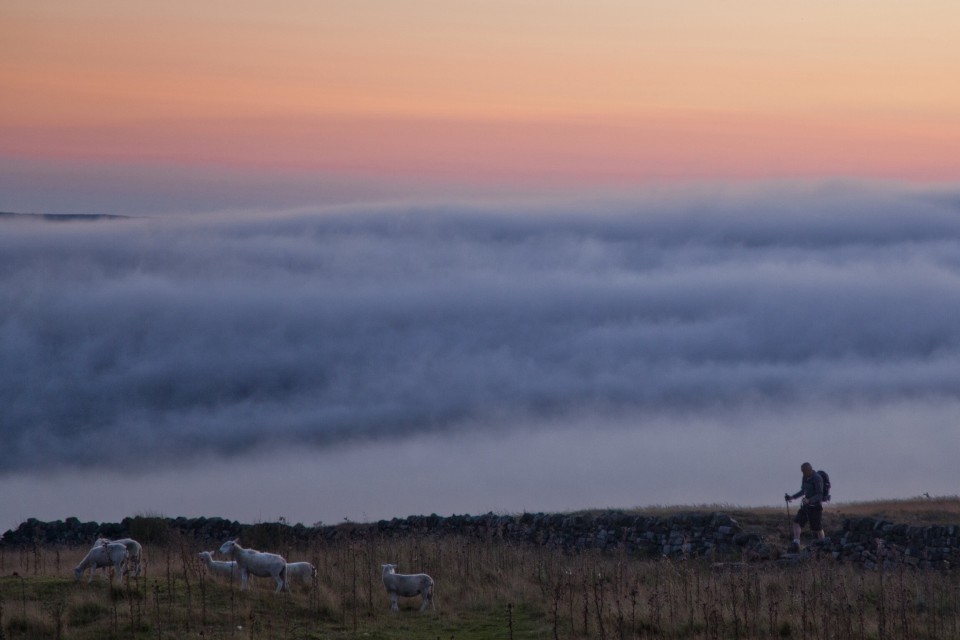
I have just completed the iconic Coast to Coast walk across England, starting at the Irish Sea and ending 13 days later at the North Sea after crossing the hills of the Lakes District, the Yorkshire Dales and the North Yorkshire moors. I walked with a guided group, a change from my usual solitary expeditions, and was very pleased with that decision as it was a lovely little group led by an excellent guide.
Walking one day with my thoughts drifting to writing as is often the way, it occurred to me that a walking group would make a perfect setting for a traditional style murder mystery in which the drama unfolds in a closed community with a defined group of characters – an isolated manor house, an island or a monastery and so on.
Lost in my reverie, I decide to use the next ten days to write a murder mystery based on the group with whom I was walking; some would live, some would die, one would be a murderer and many would have dark secrets revealed. Just for fun.
I checked with the group and all were happy for me to do this; indeed, my writing the little story became an object of conversation each night as people tried to guess/learn what was happening and what was their individual fate! I read the story to the group on our last evening and received permission to put an expanded version on my blog and to use people’s names, except one or two cases where individuals preferred me to use fictional names.
So let the story of love and death, of secrets and raw human emotion begin in the coming days, one episode at a time…
Why are pilgrims dying on the Camino?

Back in Brunswick Tom researches the deaths of pilgrims walking or cycling the Camino in the last decade and discovers a spike in deaths in the last two years. Moreover, the deaths occur at certain times and in certain sections of the Camino or Chemin de Saint Jacques in Spain or in France.
Tom finds no obvious explanation for the spike in numbers and for the location and timing for the deaths, though he can sense a pattern.
Tom writes a poignant piece about the deaths, combining the scant facts, with a dash of poetic licence, for a major daily paper and, for the first time, receives an income! Maybe his fantasy of earning a living from writing could come true.
He then blogs about the deaths of pilgrims and allows himself some speculation on what is happening and why. The response to his blog is astonishing. He is inundated by conspiracy theorists with wild explanations and hints of dark secrets. There are references to the Knights Templar, always good for a conspiracy theory, and there are even wilder ideas about the church and religious curses and hidden treasures which to Tom’s mind, are nonsense. He has uncovered a world previously unknown to him and in his innocence and with his philosophy training he is tempted to answer and have a rational discussion. Wisdom prevails and he stays silent and eventually withdraws his blog entry.
Then there is an amazing development: Tom is commissioned by a magazine to walk and write on the Via Podiensis in France! More money!
Tom agrees and decides that while undertaking his journey he will see what more he can learn about pilgrims dying on their way to Santiago.
If only he knew where his investigations would lead him!

How to de-shrine a house

It is as if Lucy has stepped out and is expected home any moment, for Tom has changed nothing in the house since the day of her death. It is a shrine to her memory.
Her clothes hang in the wardrobe, her shoes remain lined up in their grey wooden rack and her perfume and cosmetic bottles hold guard in the bathroom. The book she was reading lies open on the bedside table on her side, the one closest to the window overlooking the rear courtyard, and her iPad lies, battery flat for many years, on the dressing table where oft she sat and did her makeup while he watched and they talked of the day.
He has moved her bike from the entrance hall, but only to bring it upstairs to his study so that he can gaze upon it as he writes.
Tom knows it is all a bit “Miss Haversham”, but has rejected the pleas of his friends to change. He has no heart for it.
Tom is not mad. He knows the boundaries. He has not clothed her dressmakers dummy and danced with it at night, nor does he set out meals for her each day.
If, however, he can bring her back to life through the strength of his love, what might making a shrine achieve?
Now, after meeting Anika and returning home to Brusnwick, Lucy persuades him that it is time to change. Baby steps maybe, but steps all the same. The photos on the stairs walls they will not touch. The photos on the bedside tables they will not touch, nor her perfumes or the half empty bottle of her shampoo in the shower.
He does agree to donate some of her clothes to charity and to give away her shoes and collection of her trademark cloaks to a vintage shop run by Clarissa. He keeps her dresses with special memories and the crimson shoes she wore the day they wed, reluctantly agreeing to move them to the spare room.
He feels empty afterwards and barely listens when Lucy whispers that next he must rearrange the furniture and throw out the old fashion magazines still cluttering her work table, scissors and tape where she left them that last morning of her dashing out with a kiss and a wave and a slam of the rusty gate.
One step at a time.

10 things and one cliché I learned on the Camino

1. Not every walker is a pilgrim.
2. Not every pilgrim is a saint.
3. The one pebble on the path will always find the tender part of your sole.
4. The other side of the path always looks smoother for walking.
5. Not every albergue is a heart of camaraderie and communal food and wine.
6. Not very hospitalero is a welcoming and generous host.
7. Not every local inhabitant is enamoured of peregrinos.
8. No path is ever truly flat or straight, regardless of what the books or maps may say.
9. Not everything that happens on the Camino has meaning, let alone is a sign or a miracle.
10. Anything can be interpreted as a sign or a miracle if this is what you desire to see.

CLICHE ALERT:
You take yourself with you when you journey and it is the journey and not the destination which is important. Unutterably banal, true nonetheless.

And what is happening in our little Swedish village?

Anika is walking in long summer twilight, pacing out to the old ruined church and back through the village to the cluster of houses high in the fields and farms to the east of Ovraby. She sends startled hares running and catches a glimpse of a deer and her young.
She ponders possibilities, future scenarios of this woman from a foreign land living in this small community: never quite belonging because she is a foreigner and yet almost accepted since she married a Swede and speaks Swedish fluently. She is inside and outside, belonging and not belonging and feeling this is a metaphor for her life.
Will she become the local eccentric living alone, not perhaps with a cat, but still a figure of curiosity and sorrow?
Will she stay the tragic figure who lost her husband and chose never to love again? Who chose to remain childless and alone?
Will she stay on the track which presently runs her life and be the successful career woman travelling to and fro, retaining her house in Ovraby though rarely seen and become a figure of envy and respect amongst the village folk?
Doe she have the courage to roll the dice with Tom, that lost soul from the other side of the world who still speaks with the spirit of his dead wife, for Heaven’s sake?

Forgiveness and self-forgiveness in Santiago cathedral

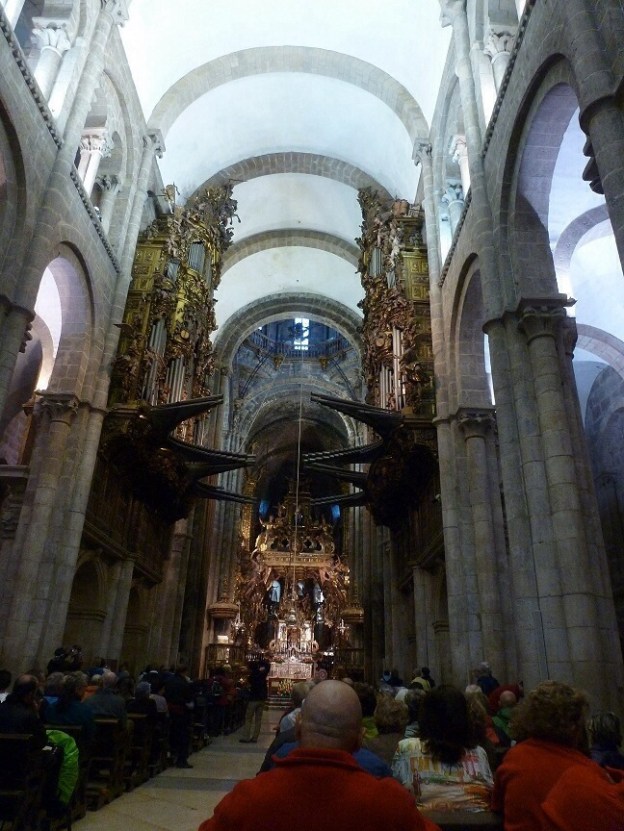
Tom completes his pilgrimage in Santiago and attends the traditional and, for many, emotionally compelling pilgrim mass in the cathedral.
Personally I was unmoved by the experience, albeit I was interested in the rituals and the profound effect on members of the congregation.
Now I admit that I am teasing because I do not wish to give the plot away too much and want you to read the entire novel in a one night sitting, unable to tear yourself away even for a moment, when it appears.
Suffice it to say here that Tom has met the man whom he holds responsible for the tragedy of his life and who is waiting for Tom in the cathedral and seeking absolution.
What is the personal responsibility for an unconscious action, a moment of carelessness which changes lives forever?
How do we forgive someone who has changed our life irrevocably?
How do we learn to forgive ourselves?
Why do we blame ourselves for matters when the rational part of our brain knows that we are innocent of any culpability?
Is it not fascinating how we constantly rewrite and reframe our pasts until we have a narrative which suits us and fits the person we have become: perhaps more accurately, the person we would have liked to become?
How will Tom respond to this plea for help?
What does Lucy think of Tom’s response to this figure from his past?
What has Tom learned from his pilgrimage walk?

The angry prophet

This the name which both Tom in my novel and I in the world of walking and writing have given to a man whom I met on the Chemin de Saint Jacques in France last year and who I have fictionalised for the purposes of my novel.
Let me tell you first how I met him in July 2013…
I was walking in Southern France in July, hot and unrelentingly humid all month and no wonder that I saw almost no other walkers after Cahors.
I met him on a lonely track, dressed in what looked like monk’s clothing but which I suspect was simply an old cloak, with a stained and battered canvas bag slung painfully across his shoulders on a wooden stick. He wore old fashioned sandals and walked slowly and unsteadily, yet I saw him day after day until we lost contact.
He said nothing. He glared at me whilst I, in my normal way, nodded politely and said ‘buen Camino’, the traditional form of address.
He did me no harm and in times gone by perhaps he would have been seen as a prophet, a Biblical figure returning from the desert with truths and revelations.
Was he truly angry? Distressed? Lonely? Seeking or holding a truth? I know not, but I have taken this striking figure and embellished him for my story so that he can play a role as Tom strives to uncover the mystery of pilgrims dying on the Camino in circumstances increasingly curious and disturbing.
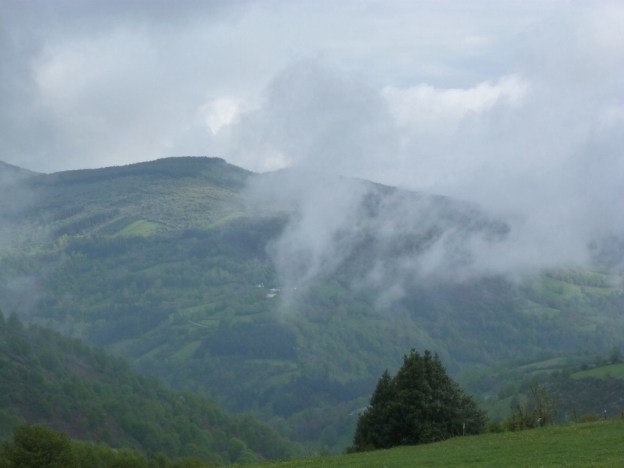
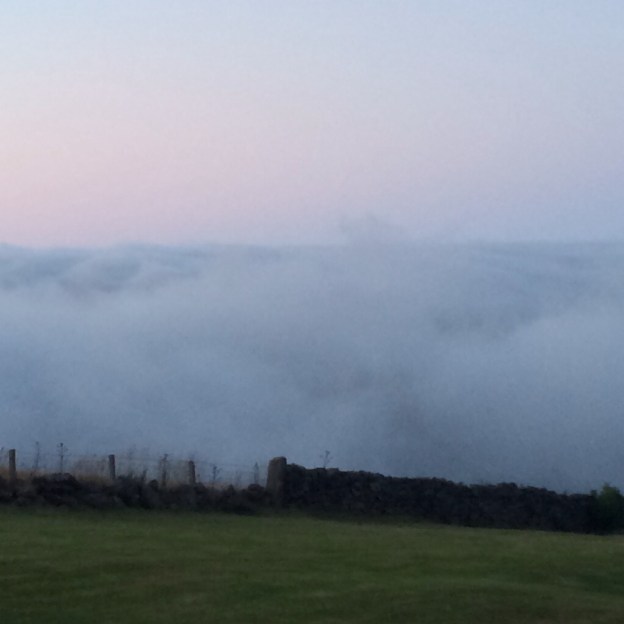
Now place yourself in the misty mountains past O Cebreiro, one of the highlights for me on my journey across France and Spain.

Meanwhile, back at the Cruz de Ferro …

Anika is in Ovraby (or is she?) and Tom is continuing his pilgrimage to Santiago after they have parted in Astorga with a commitment to meet again in one year. Remember?
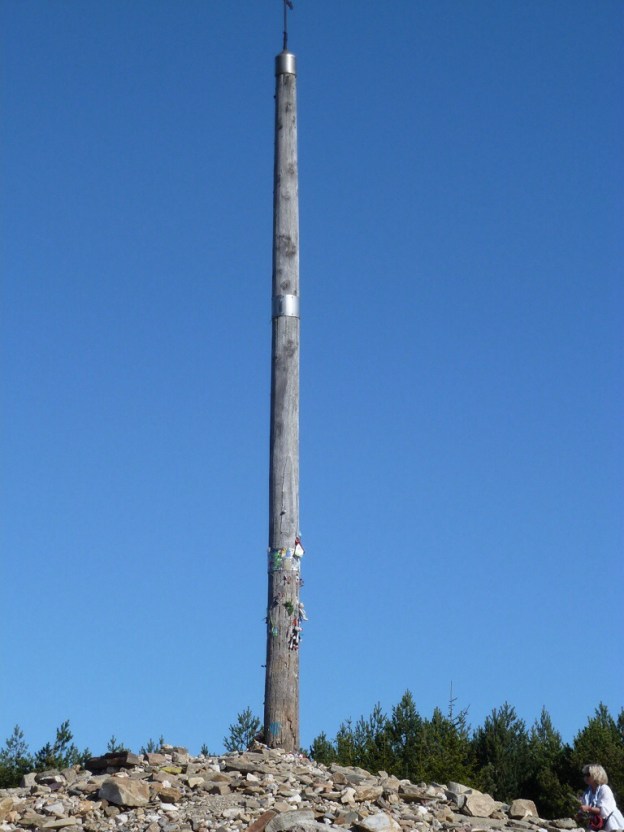
He arrives at the famed Cruz de Ferro high in the mountains of Leon with the fossil he has carried with him from Australia and which he will leave at the cross as tradition demands and as his heart desires. It is a moment long anticipated, albeit he has never been able to explain to Lucy, whose spirit walks by his side, what he expects from the action. He is disappointed with the banality of the site; the milling crowds, the noise and the incessant snapping of photos for Instagram or Facebook or whatever. He drops his fossil on the pile of stones and flees.
We do not gain self knowledge or become reconciled by following the crowd or performing rituals simply because others do and certainly we do not attain forgiveness, let alone self-forgiveness, through placing one stone on top of another.
Lucy knows this.
Tom will learn this.
Confession time: I performed the same ritual with the same result two years ago.

In a small Swedish village where strange things may happen

I am in Ovraby in Southern Sweden for mid summer in the very village where our heroine Anika lives in the dream house she built with her beloved Anders before tragedy struck.
That tragedy and the aftermath has driven her to the Camino where, you will recall, she has recently met Tom from Australia and where both are trying to come to terms with the past and to believe in a now and a future.
We are in a typical small village, maybe thirty houses with no shops or other services or facilities and where neatness and control and good appearance may hide many a secret. I am not staying in Anika’s house, but the one I have chosen for her is not so far away and fits perfectly with what I have in mind for her.
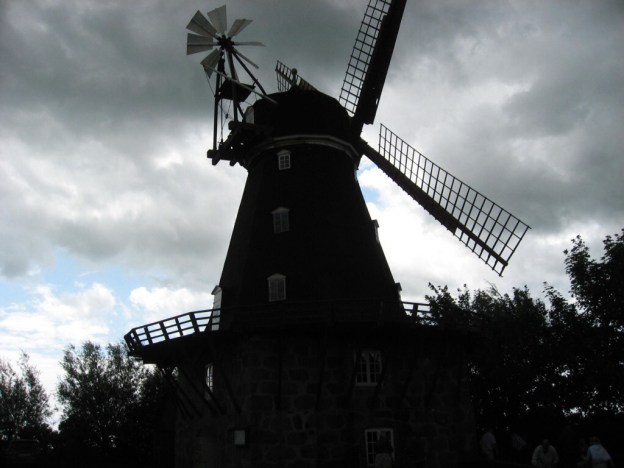
Mid summer is over, the usual mix of cloud, scudding rain and lovely sunshine plus the maypole at the old mill and the ebb and flow of friends and strangers coming together for a day and a night.
Tom has returned to Australia and they have agreed to meet again in one year.
Will it happen?

Camino secrets

I did not meet the woman of mystery or if I did, I was not paying attention at the time. For three evenings the thunderstorms threatened, but did no more than that. Nor have I yet met a mad monk, though I did encounter a woman when I stopped under rare shade to rest, talking to herself and, unaware that I have a knowledge of French, muttering to herself in French as she looked sideways ‘What does he know? What does he want from me? Why is he here?’. I departed, anxious not to distress her further.
For a day I walked with a person and as is common on the Camino, we told a little of our stories and I divulged that I was writing a novel set on the Camino.
Lo and behold, for the next week I have been met with the comment ‘Oh you’re the guy writing a novel!’ followed by regaling me with humorous yarns of what had befallen them on the Camino and exhortations to include them and their anecdotes in my novel. My reply that I was writing of love and death, not of what happened at dinner last night, invariably was met with the reply ‘put it in anyway, people will love it.’
Sorry guys, your stories will not be appearing. You will have to write your own.
Oh and I am now in Mansilla de las Mulas and things are heating up between my hero and heroine as they begin to learn of each other’s tragic histories.
Keep watching this space!