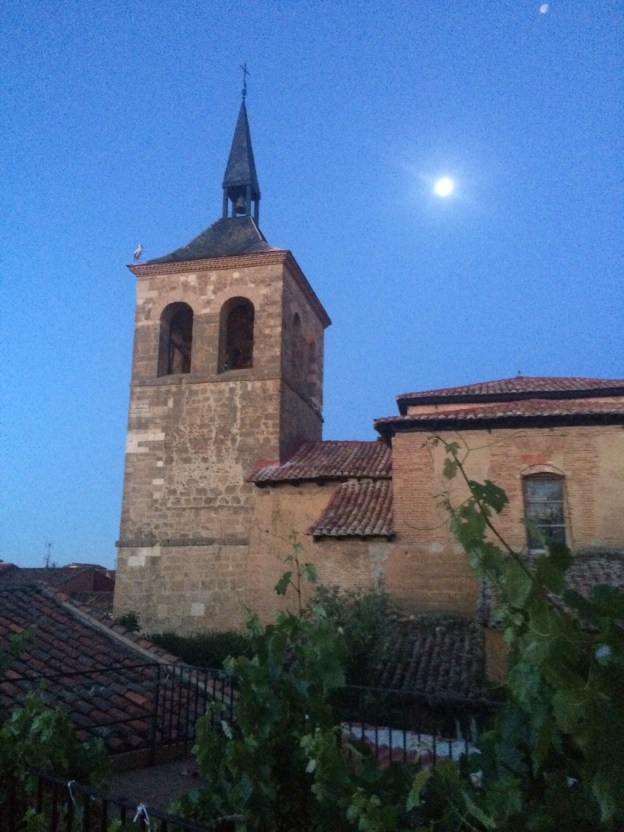
I have decided, sober and in the cold light of day, despite much trepidation and every common sense cell in my body saying ‘no’, that I shall participate in NaNoWriMo for the first time. This is a commitment to write a 50,000 word novel draft in one month starting tomorrow. I think 300,000 wannabes took part globally last year, what could possibly go wrong? So, yes, I have to write 1500 words tomorrow morning! That is, 1,500 words ….
Why undertake such a crazy mission? It has taken me two years to have a second completed draft of 80,000 words of the current manuscript and I aim for 500-1000 words most days, so the odds do not look good.
And yet. And yet, I have reached the stage of the current manuscript where I need to put it aside for a time and let it lie fallow (one of the few things I remember from my school days, that plus ‘why sea breezes?’) as I have applied for an ASA mentorship, entered another competition and need to ‘let it go’.
And also – drum roll – I have the plot and characters and setting for ‘my next novel’, published nothing yet, but it sounds good, right? and so I do have a flying start and am, believe it or not, eager to have a go at it and see where it might lead me. By nature I am a ‘plotter’ stemming from churning out academic books and articles in my past life as a university professor, and being a ‘pantser’ will be good for me; a bit like cold showers, AFD’s, clean living and long runs in the morning are ‘good for me’.
Anyway, I am committing myself publically to keep the pressure on myself; please feel free to check on me and keep me honest. Oh and wish me luck.
Author Archives: brunswick123
You believe your lover is a murderer: what do you do?
No, I am not talking on this post directly about my novel, though precisely this does happen to Tom on the Camino, nor about Gone Girl which is a neat re-working of the theme. In the so-called real world, the non-literary world let us call it, what would you do if you become suspicious and then convinced that your lover is a killer?
Infidelity leaves love a twitching corpse, but there is expectation of a full recovery [in time, as they say]. With murder, dead is dead.
Do you confront your lover? Well, you had better be right in your suspicions because if you are wrong you can kiss that relationship good bye.
Do you empathise and understand? Maybe the victim ‘deserved it’ or you convince yourself it is so; maybe it happened a long time ago, maybe you can find extenuating circumstances.
Do you simply love them and accept it – ‘love conquers all’
What is your moral responsibility?
Do you turn a blind eye because it is all too hard and horrible?
Do you watch and hope to learn more,sleeping with one eye open?
Do you ‘do your duty’ and turn them over to the law though it tears your heart apart?
And what if you are wrong?
What then?
10 obvious things I had to learn for myself writing my novel
I have written scholarly books in a previous life, so I have omitted the stuff I knew; for example, writing is hard work [oh yes!]; there is no other way to start than to write one word and then another and then a sentence and a paragraph etc; if it is boring and unclear to you, well, it will be to everyone else and it is amazing what the human mind can conjure up to avoid sitting in front of the blank page and creating a masterpiece.
No doubt these are the staple of writing workshops and you already know them, dear reader. I did it the hard way.
1. Have in mind for whom you are writing – note that I am old-fashioned and cannot end a sentence with a preposition. Write for an audience, not simply for yourself.
2. ‘Nice’ and ‘good’ characters are boring; make them complicated and imperfect.
3. What makes me most uncomfortable and even distressed as a subject is what turns out to be my most authentic and engaging writing.
4. Insert ‘shame’ in 3 and it is doubly so.
5. Eliminate the adverb.
6. Avoid generic descriptions and declarations, always make them personal and specific to the characters’ points of view.
7. Show, not tell. Yes, yes, a total cliche but especially important to me as I spent years as a university professor teaching and writing to explain and analyse. Great for teaching, death for a novel.
8. Following from 7, ‘less is more’.
9. If it feels flat or inauthentic to me, it will to a reader. Dump it and try again; perseverance no matter what is not always the answer.
10. Swallow hard – gulp – and be prepared to discard entire drafts.
soul mates are the unicorns of romance
Meaning?
We all love unicorns
We want to believe that unicorns exist outside of our dreams
Unicorns should be real
Unicorns do not exist
sad but true, sorry to be the one to break the bad news
Now replace the word ‘unicorn’ with ‘soul mate’ and repeat the above
sad but true, sorry to be the one to break the bad news
found them, killed them, wrong house
which was my entry in the Writers Victoria ‘six word story’ competition and which received a prize!
Thank you Writers Victoria!
It is the first time I have entered any form of literary competition, so you can imagine my happiness at this modest success and the encouragement it gives me to persevere with my longer forms of fiction writing – not that I was ever going to give.
Many of you will know that the concept of the six word story began when Hemingway was challenged and came up with this poignant pearl:
for sale, baby shoes, never worn
So, please forgive my moment of boastful self-congratulation and now I return to the grindstone of good old Scrivener.
Onwards and upwards!
A bucket full of red herrings
Having used the Austen device to tear my lovers apart, it is time to use that old standard in mysteries, namely, the RED HERRING. Heaps of them!
By the way, from whence comes the term ‘red herring’? Someone out there will tell me.
So, for those who have been paying attention (thank you, thank you!) who are the obvious red herrings upon which suspicion may fall for the deaths of the pilgrims?
Now that we see a possible religious theme and the playing out of a macabre ritual through the placement of corpses on various church steps and patios, who is our most likely red herring candidate?
Given the usual twists and turns of mystery stories, will one of the aforesaid herrings actually be the killer?
Will it be like ‘real life’ where there is rarely one truth? Don’t be alarmed, I am not going post-modern on you (in any event, so passe), but it may be that there are competing truths….
Oh and to make it clear, I am going to be a complete rat and not give any answers. I do want you to read the book when it does appear – no holding of breath though 😉
The Austen device
Tom and Anika meet again in Conques in France exactly one year after they parted and exactly as they had promised. Their love has withstood its first test and it would be easy now to write a story where they stay together and live happily ever after; how boring would that be? As Tolstoy famously wrote [I paraphrase here] – all happy families are the same, each unhappy family is unhappy in its own distinct way.
The genre demands that our two lovers must suffer for their love as we do in the so called real world. They must be separated before they can consummate [delightfully old fashioned word, no?] their love and in Jane Austen’s world they must be kept apart until the very end through circumstance or that favourite device, ‘the misunderstanding’. Think Persuasion in particular where red blooded readers will be shouting ‘come on guys, get it together!’ but the resolution is deferred repeatedly.
So it comes to pass that Tom and Anika must be plucked apart; as luck would have it, Anika receive news that her father in England has had a heart attack and she must leave Conques and fly to England that very day.
Mere hours after being reunited, Anika is in a taxi to Rodez airport and Tom is left bereft in the village.
Will they never be together?
And how is their romance linked with the mystery of the pilgrim deaths?
Ritual deaths
Tom learns bizarre details of two pilgrim deaths on the Chemin near where he is currently walking. The deaths had been almost an intellectual puzzle to solve, now they take on a grisly reality.
The bodies of two elderly female pilgrims have been found in nearby villages, meticulously posed on the steps of little village churches in positions of prayer. It is as though they have fallen asleep and been taken by the angel of mercy whilst in the act of prayer; calm, meditative expressions on their faces and no sign of struggle or harm. No sign of violence and one could be simply the death of an old pilgrim struggling to reach the church for succour and shelter; two deaths the same is stretching coincidence too far.
Nobody except Tom seems to know or to care.
What is he to do?
Is Lucy a ghost?
Readers and friends have asked me to ‘explain’ Lucy and that is to try to explain the unexplainable.
They ask ‘is she a ghost?’
If so, does she have an existence and autonomy of her own?
How does she come into being?
Has she power over the living?
You will recall that Lucy is Tom’s dead wife whom he has brought back into existence ( I did not use the word ‘life’ ) from the extremes of his love and his grief. My personal belief and experience is that such appearances in bodily form, call them spirits or ghosts or whatever, are entirely of our own making and have no independent existence. They cannot be seen or heard by others and can ‘influence’ the living only through dialogue.
Lucy is a projection of Tom’s emotional state; if you like, she is his alter ego with whom he converses and who guides him. He trusts her and relies upon her as he did when she was alive and in my novel she guides him out of his grief and towards the light and the future.
Tom knows what he needs to do, but needs to hear it from her as part of his journey out of sorrow and guilt towards happiness and self-forgiveness.
What greater love could there be?
Love and death are in the air on the Chemin de Saint Jacques
Tom begins his commissioned walk from Le Puy en Velay to Saint Jean Pied de Port, the 734 km journey which I undertook in 2013 as preparation for this novel.
In 12 days time it will be one year since Anika and Tom parted and agreed to meet again in a year.
The two have had zero contact in the last year.
Much will happen to our hero in the 12 days until the two lovers are supposed to be re-united.
The weather is bad on the Aubrac plateau; snow and sleet and wind churning the path to mud and ice and few are walking in such wild weather.
Tom travels through the forests near Domaine du Sauvage and learns of the deaths of two pilgrims in the woods. A few days later he hears of the death of a third pilgrim and what was abstract when read on a computer screen becomes real as he walks the same paths upon which they walked and died and hears their stories from the locals.
The reality of the deaths is heightened by the drama of the wild weather and the handful of scared pilgrims huddle together as news of the dead pilgrims spreads along the Chemin.
In the midst of the fear and of the rumours, Tom is astonished to meet Charo, whom he had met previously when crossing the Pyrenees on another day of wild weather and who had told him a bizarre story of an elderly pilgrim ‘vanishing’ near the ancient monastery refuge of Roncesvalles: intriguingly, there was talk of Anika accompanying the woman before she died.
What is Charo, a most unlikely pilgrim, doing walking the Chemin alone?
Is it a coincidence that she has met Tom again?
Will Tom lose faith that he and Anika will meet on their anniversary (how? where?) and instead be tempted by the attractive and flirtatious Charo?
How and why are the pilgrims dying?
How can Tom combine solving the mystery of their deaths with writing his novel about their deaths?